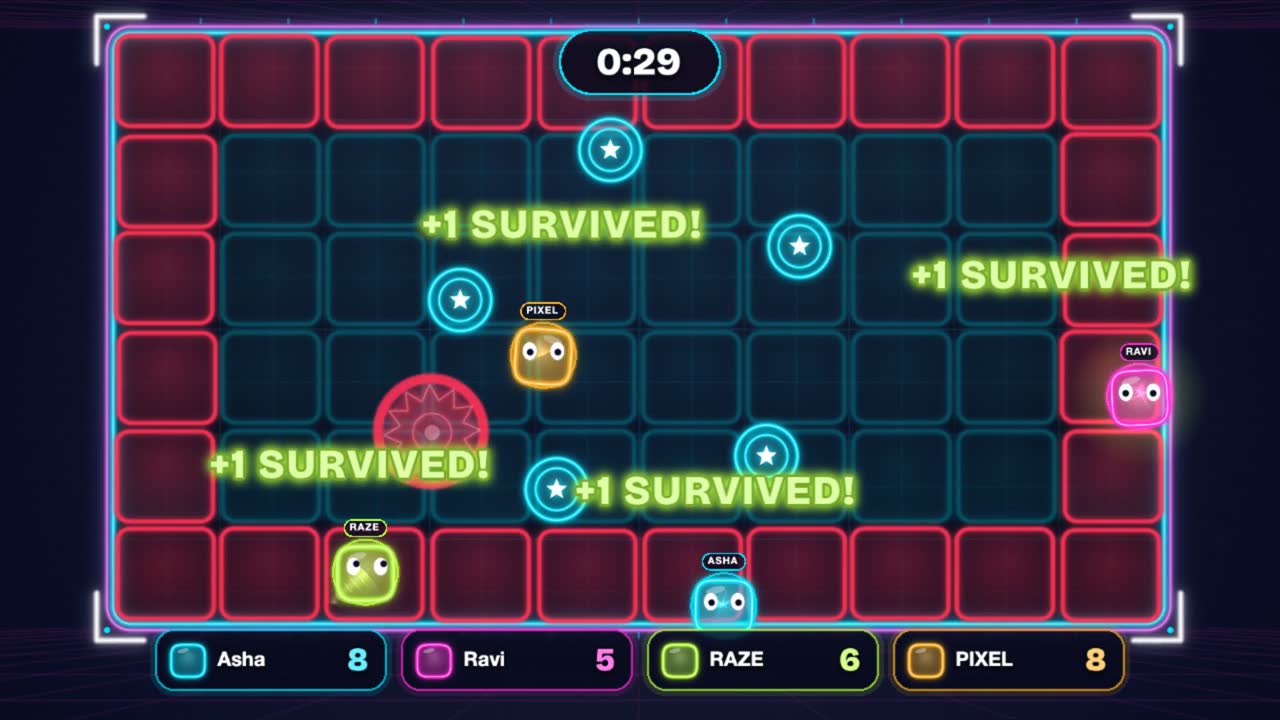
Your living room just invented a game.
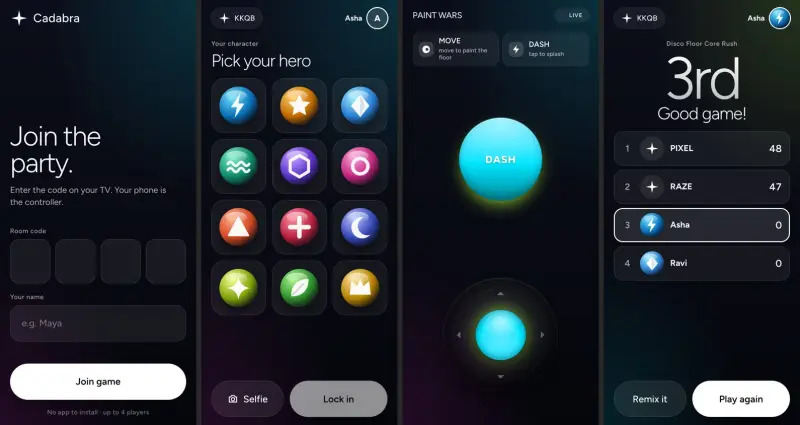
Cadabra is a party game for Fire TV. Everyone throws ideas in from their phone, an AI designer turns them into a real physics game, and a few seconds later the room is playing it. Phones are the controllers. Nothing to install.
v1.0 for Fire TV Stick. MIT licensed. Runs in a desktop browser too.
From a shout to a game in under a minute.
"Cadabra" was Amazon's first name. Abracadabra means I create as I speak, and that is the whole game: the room says what it wants, and the TV builds it.
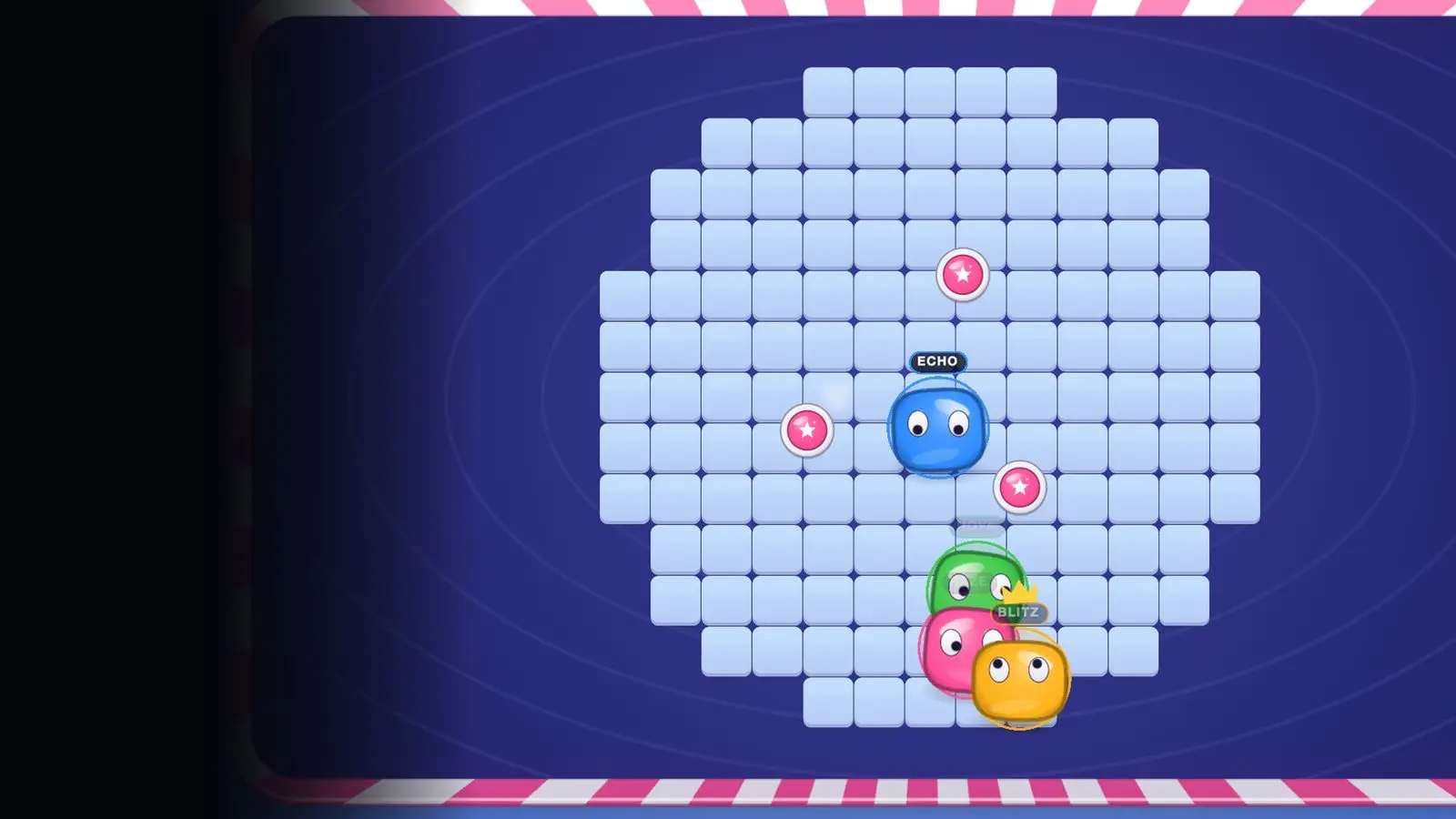
Seven games. Four looks. Real physics.
Cadabra ships with seven built-in games, and every game the AI invents is built from the same parts. Each one runs on planck physics: bumpers kick, balls bounce, crates topple and barrels explode.
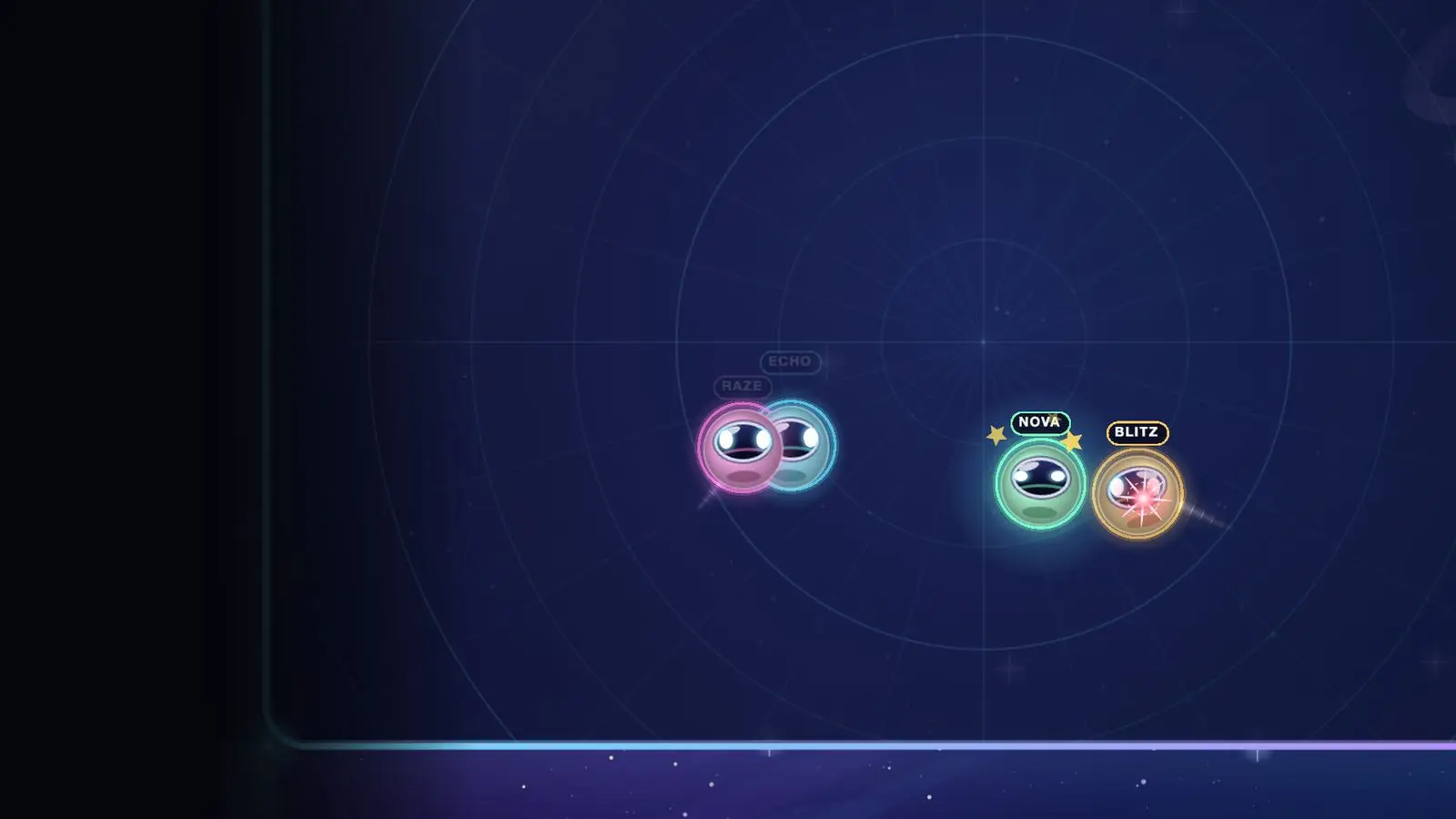
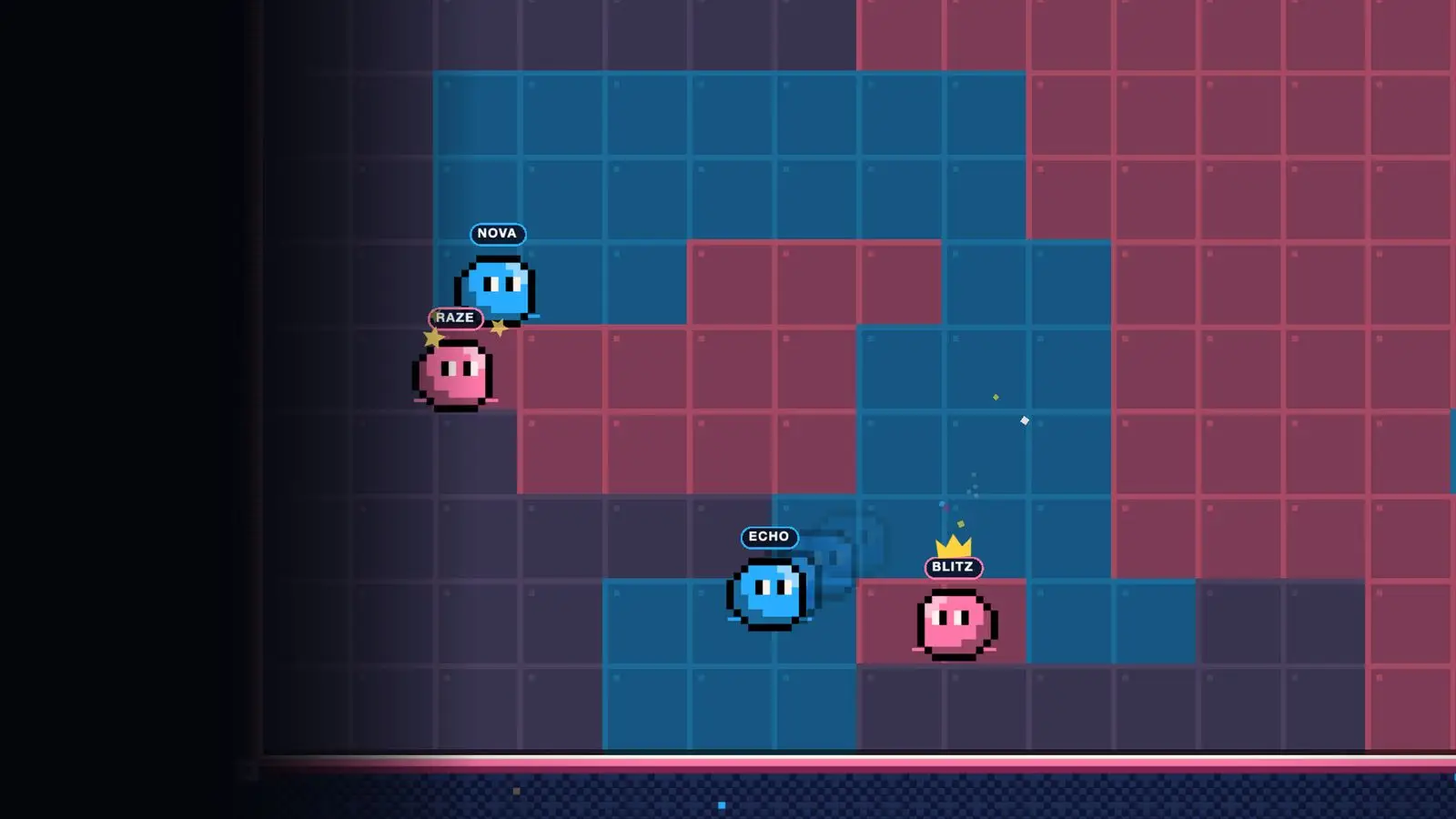
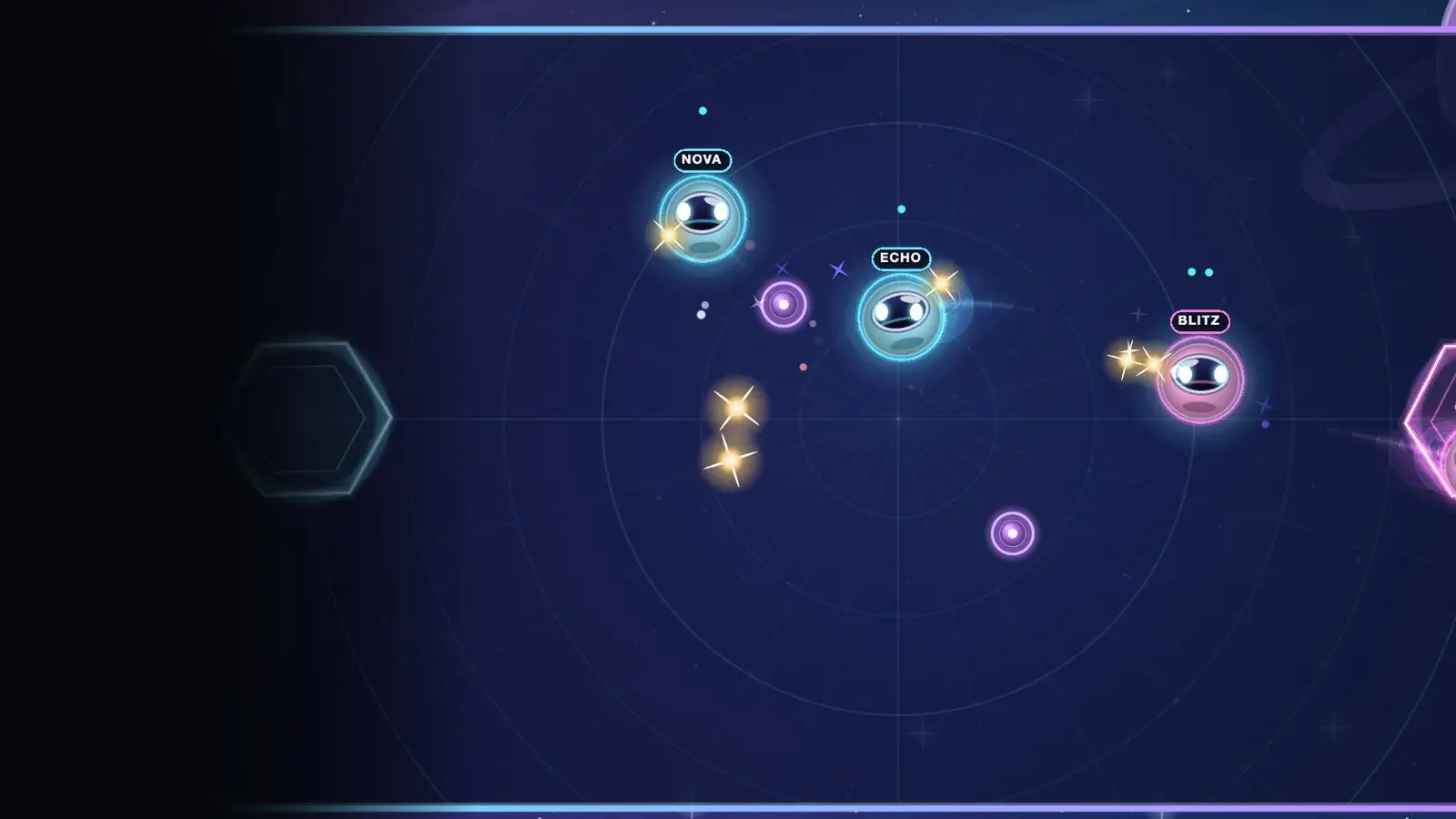
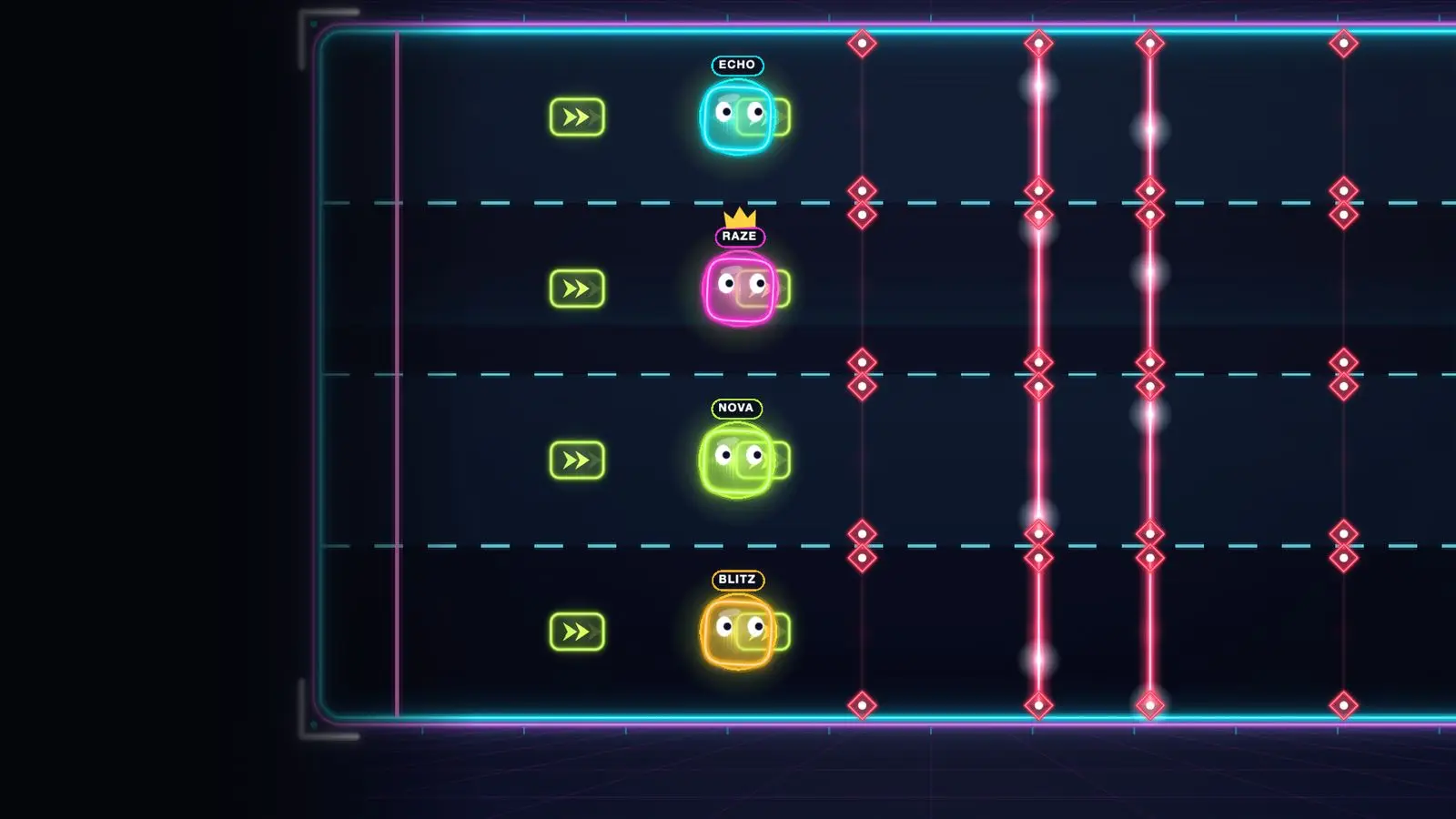
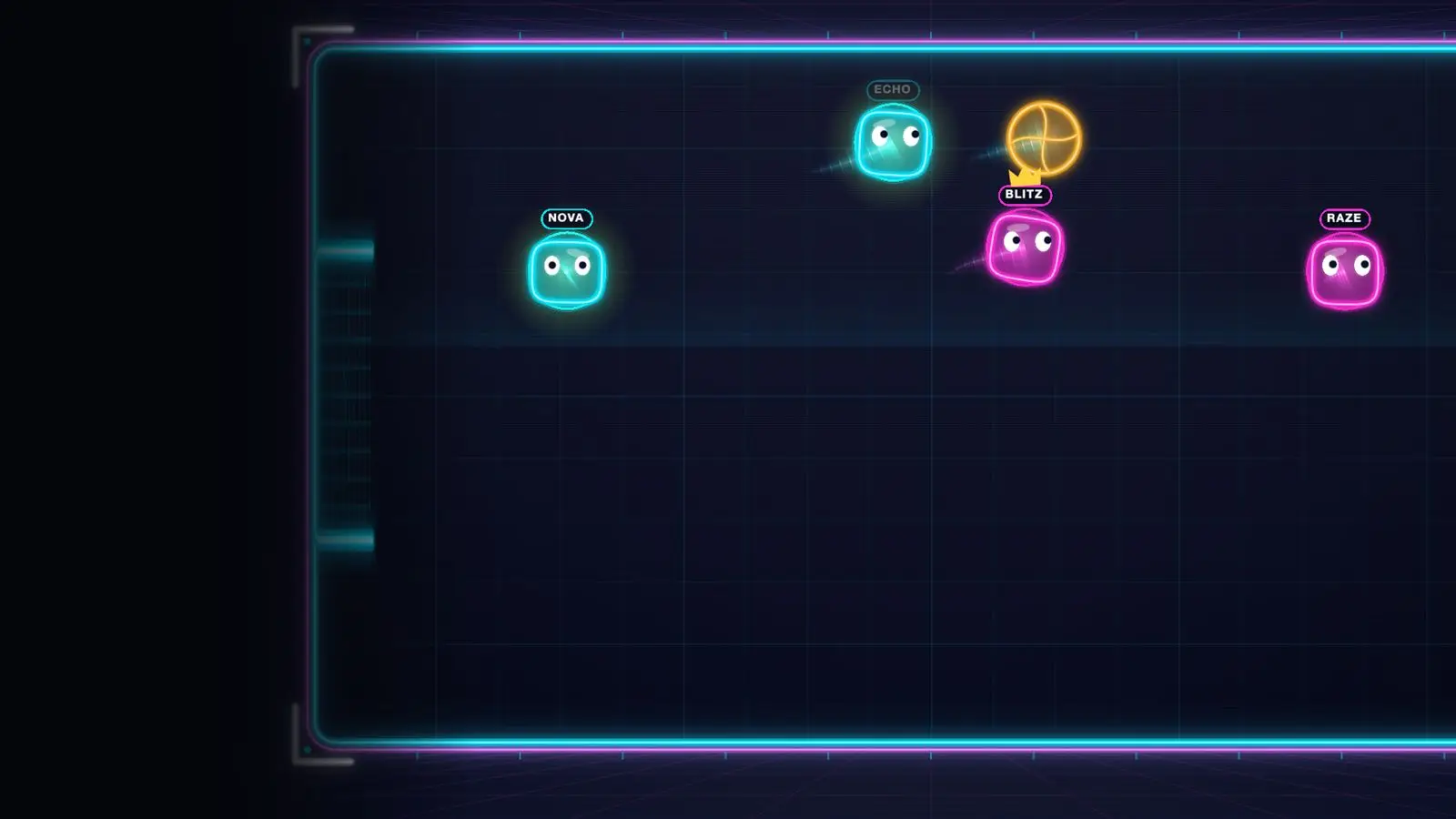
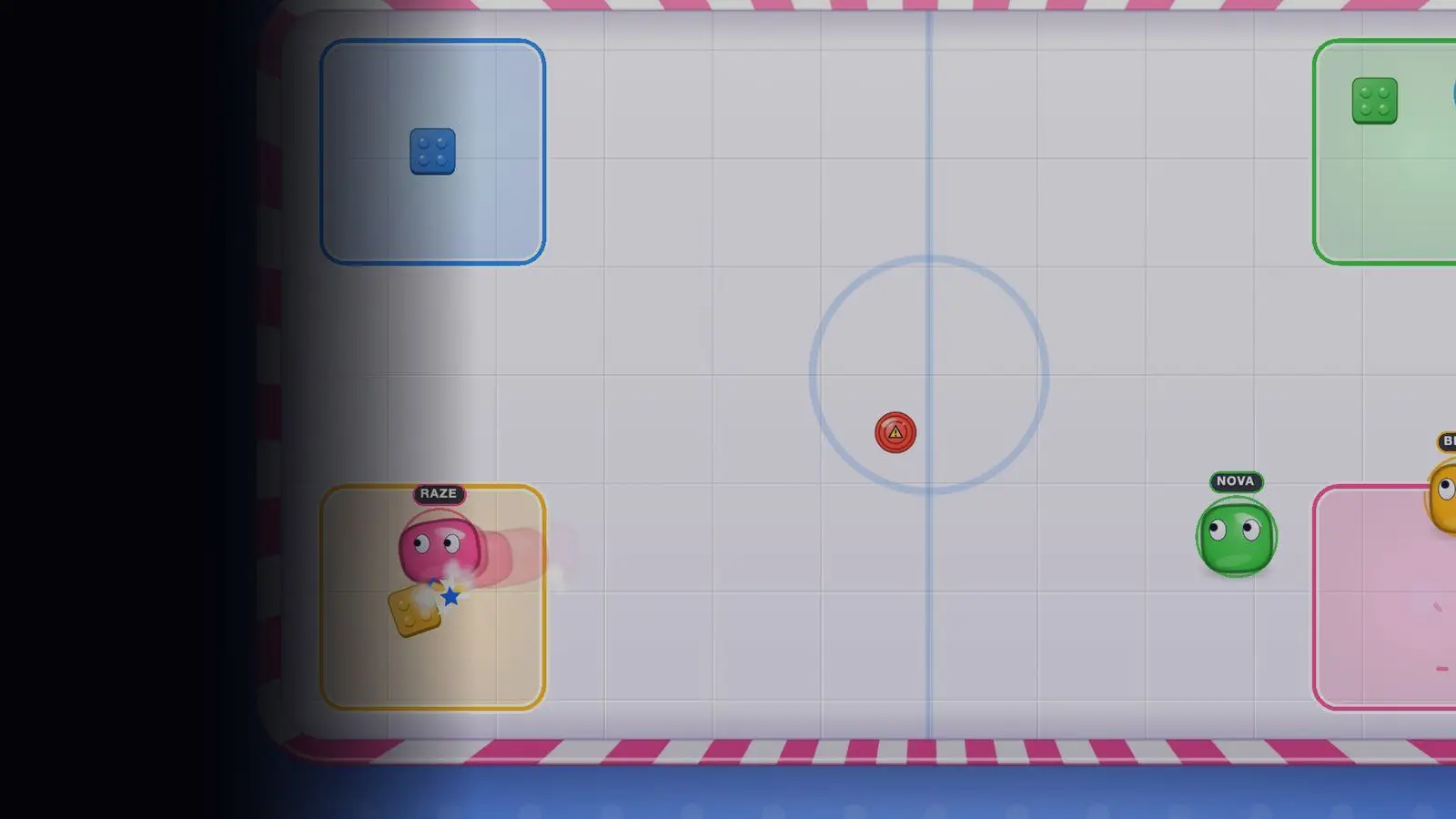
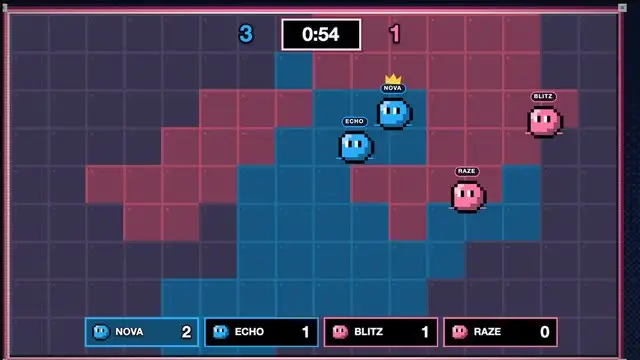
Ring Out
Bumper sumo on a floating ring. Dash rivals off the edge.
This row works like the TV home: use the arrow keys, or tap a tile.
Any game, in any of four looks.
All the art is drawn in code, so a look is a setting, not an asset pack. The AI picks one for each pitch, with music and sound to match.
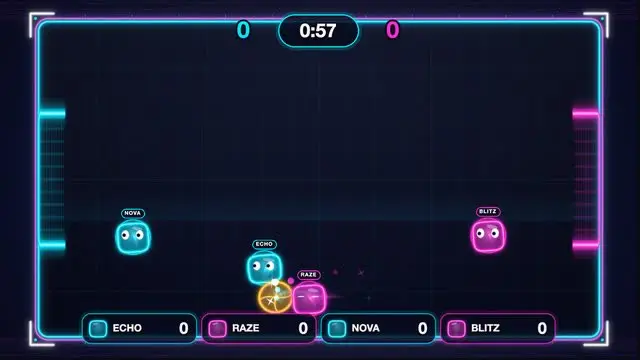
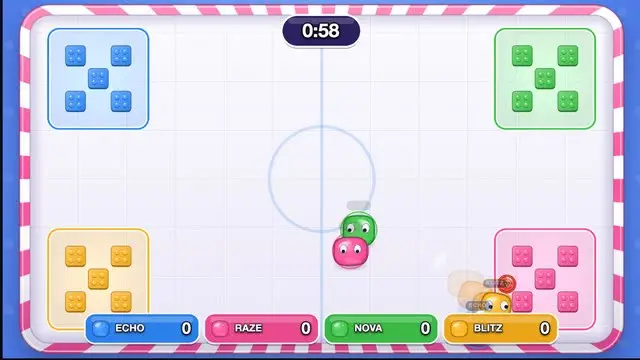
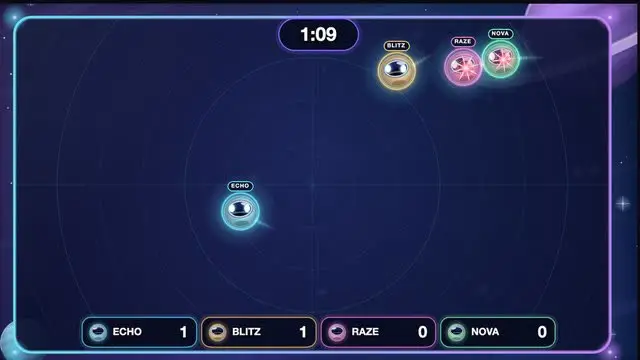
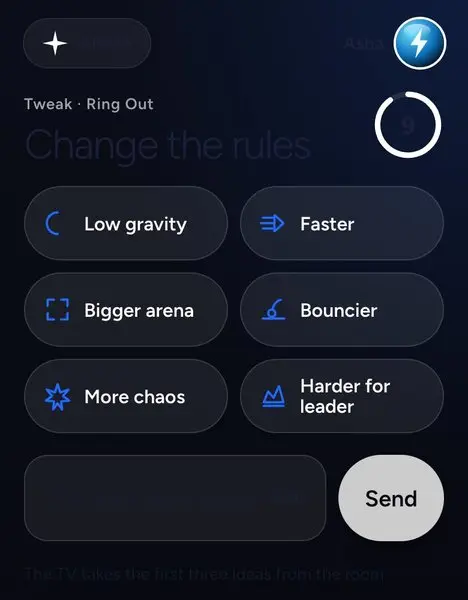
Don't like a rule? Change it from your phone.
After every round, the phones get ten seconds to ask for something different: tap Low gravity, Faster, Bigger arena, Bouncier, More chaos or Harder for leader, or type your own. The AI patches the game, shows what it changed, and you play the new version.
- 10 sAskUp to three requests from the room, chips or 80 typed characters, screened by Guardrails.
- ~5 sPatch and playtestThe AI edits the game spec with a JSON Patch, then bots play a full round before you see it.
- 0 sReplayA "What changed" card lists the changes, and the round restarts. If the AI is slow, tested presets step in.
Try it here.
A toy version of the tweak loop, running in your browser. Tap a chip and the rules of this little arena change, the same way the AI patches a real game on the TV.
The AI designs. It never writes code.
A game is a GameSpec: data that composes nine tested blocks with a physics world and a look. The designer builds specs with tool calls, and a spec only reaches the TV after four bots finish a full round with it.
AWS ap-south-1, one CDK stack
The TV is in charge
A deterministic, seeded engine and the physics run on the stick. Phones only send inputs.
Bots test every game
The playtest gate says exactly what failed, like "only 1 of 4 bots scored", so the model fixes it in its next call.
Nobody waits for a model
Pitches get 8 s, the winner 25 s, tweaks 15 s. Each step has a fallback that is already good.
Family-safe by default
Bedrock Guardrails screens every idea, typed tweak, pitch and caption, whichever model answers.
Read more in Architecture and AI designer and Tweak loop.
Measured on the cheapest Fire TV Stick.
Frame rates are from a Fire TV Stick HD (Fire OS 7.7, 922 MB RAM) in the real app with four bots. Timings are from the live backend.
Frame rate per game
Crate Crash started at 45 fps. Pixi was rebuilding its render instructions every frame and 1080p fill rate ate the rest. Fixing the depth sort and rendering at 720p took it to 59.3.
Make any phone a controller.
We pulled the controller layer out into couchpad, an MIT library for TV and web party games. Scan a QR code and the phone is a gamepad.
- Direct by default. A WebRTC DataChannel on the local network, 13 to 16 ms measured.
- Relay when it has to. Falls back to a WebSocket relay with chunking, a reliable queue, keepalive and rejoin.
- Widgets included. Joystick, button, hold, tilt, swipe, draw, text and vote.
- Bring your own server. Ships with a reference signaling server and an example.
Say it. Play it.
Sideload the APK on a Fire TV Stick, or run the TV app in a desktop browser with npm install and two dev servers.